React & MediaWiki / Wikibase
- Interactive interfaces for structured data
- Linked Open Data visualization
- Entity relationships – React Flow, Dagre
- Geographic data visualization – Leaflet
Interactive interfaces · REST API · React
I focus on connecting React to database systems, building interactive user interfaces and visualising structured data.
For projects that need more than a standard website, I build interactive React applications. WordPress can continue to provide a clear administration interface, while React delivers a fast, user-friendly frontend.
React Applications & CMS Integration
Research · data · connections
I bring together historical research, digital documentation and data work. My focus is on historic theatre buildings, performance spaces, architecture and cultural heritage.
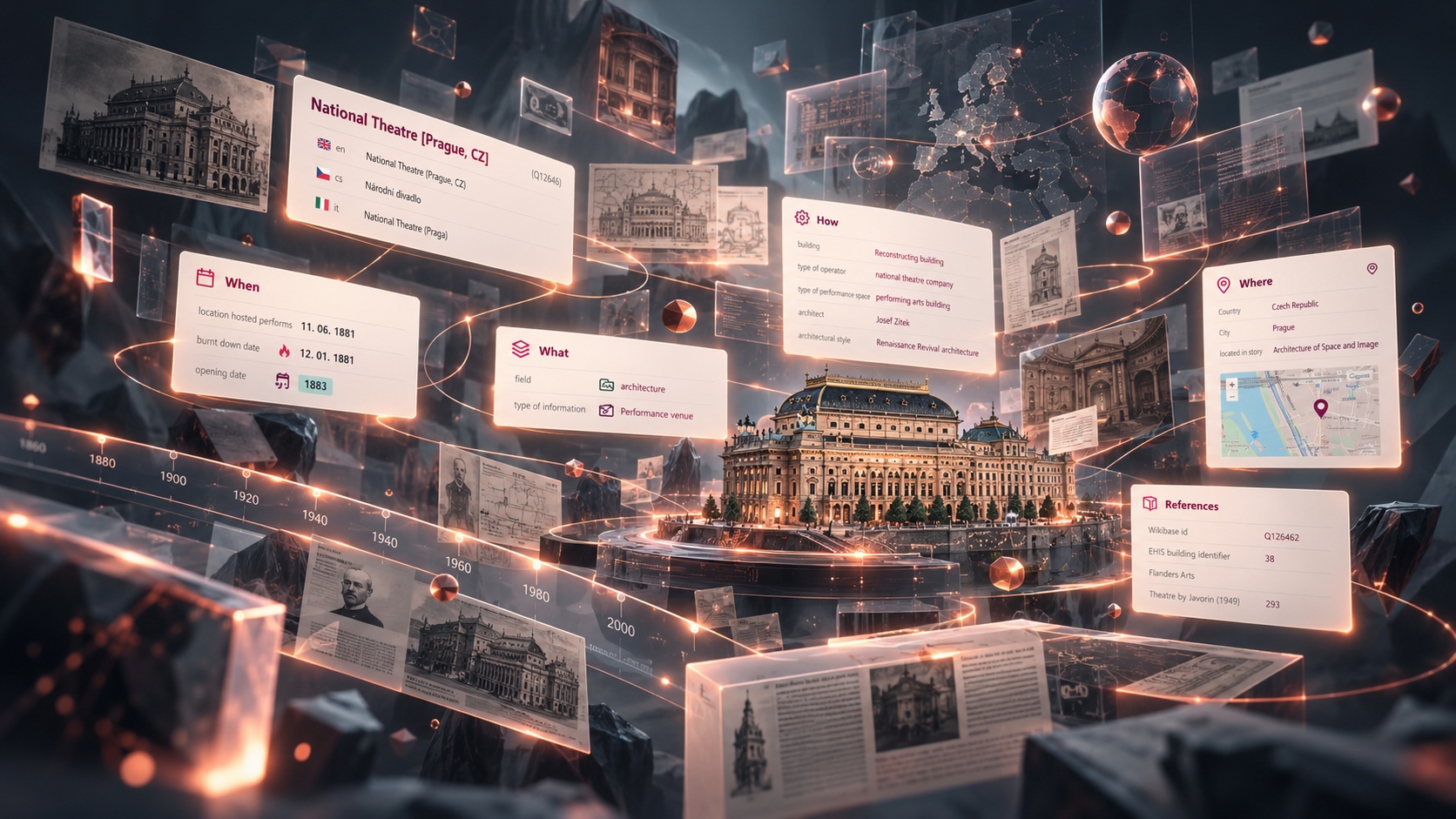
I turn archival sources and historical publications into verified, structured records. Using CanonBase, MediaWiki and Wikibase, I connect people, places, buildings, events and documents in knowledge graphs while preserving references to their sources.
For me, historical research involves asking challenging questions, questioning my own conclusions and holding two opposing hypotheses in mind at the same time. This approach helps me examine apparent certainties and remain open to different interpretations of the sources.

– present
I link data from various institutions to authority records. Using PHP and OpenRefine, I have made more than 100,000 Wikidata edits.
Writing on theatre architecture
For the Theatre Architecture in Europe (EUTA) database, I wrote original articles on the history of theatre buildings and performance spaces. In addition to my own writing, I also translated texts by other authors.
The database contains more than 35,000 photographs, often accompanied by descriptions. I have personally documented over 700 theatres in five countries for the database.
Research · culture · education
Data modelling · RDF / SPARQL · knowledge graphs
I combine historical and humanities research with hands-on software development. I help design data models, ontologies and knowledge graphs that structure research data and make it possible to link, verify and reuse it.
I can move between conceptual modelling and implementation. As well as designing graph models, I develop custom tools for data transformation, reconciliation, validation, querying and visualisation. My work draws on experience in programming, RDF, SPARQL, ontology design and research data modelling.
Private research project
I have also developed a private structured research database analysing recurring practices in non-bank lending and related legal cases. The database itself is not public because the underlying material contains personal data and information about legal proceedings.
A substantial part of the data was acquired through OSINT research and structured extraction from public sources, including the insolvency register. The project involves combining heterogeneous records, resolving identities and identifying recurring relationships and patterns. Structured data serves as a basis for legal and investigative research.
Public sources · research · structured data
From fragmented information to structured data and verifiable connections.
I systematically search for, process and analyse publicly available information through Open-Source Intelligence (OSINT). I combine research and analytical work with the development of custom tools and technologies for working with structured data.
I focus on connecting information from public registers, court decisions, insolvency databases, public procurement systems and other open sources. This includes identifying and matching entities across databases, analysing their relationships and finding connections that may not be apparent from individual records.
Publicly available information is often scattered across unrelated databases, documents and information systems. Sources differ in structure, terminology, identifiers and record quality. Comparing them therefore requires both research and systematic data processing and reconciliation.
For this purpose, I design data pipelines covering information acquisition, assessment, cleaning, normalisation and transformation into consistent data structures.
I use relational databases, RDF, SPARQL and Wikibase to create linked data models that combine information from different sources, identify shared entities and enable analysis of their relationships.
The result is unified, structured and interconnected data, which can be searched, analysed, visualised and reused. Preserving links to original sources is an essential part of the process, so that individual findings can be verified later.
My work brings together two complementary areas:
Searching for public information, identifying entities, comparing records across databases, mapping relationships and evaluating the connections found.
Programming custom solutions for acquiring, cleaning, matching and structuring data, automating repetitive tasks and creating databases for advanced querying and analysis.
This combination makes it possible to approach OSINT as a systematic process, beyond a one-off investigation. Its results can be continuously expanded, updated and used in further analysis.
I emphasise traceability of information, transparency of sources and reproducibility of analytical methods. I distinguish between verified facts, probable matches and hypotheses that require further investigation.
I do more than find information. I connect and structure it, looking for relationships that are not immediately apparent in individual sources.
Source transparency · Entity identification · Database linking · Verifiable conclusions
Practical experience
In my own research project on non-bank lending and related legal cases, I connect public records, including information from the insolvency register. I transform heterogeneous documents into structured data, reconcile identities and look for recurring relationships and practices. The database itself is not public because it contains personal data and information about legal proceedings.
Historical Research & Digital Presentation
From archival research to a digital presentation of history.
I offer institutions, cultural organisations and other organisations comprehensive historical research and its transformation into a modern presentation website.
I combine historical research, work with archival sources, document digitisation and information structuring with website design and development.
The result is a clear, visually appealing digital presentation that can include an institution’s history, notable individuals, timelines, archival photographs, documents, interactive maps and thematic databases.
History and culture online
On some projects, I also collaborate with an archivist or librarian.
An author’s website featuring a biography, bibliography, literary work, interviews, photographs and other documentary material.
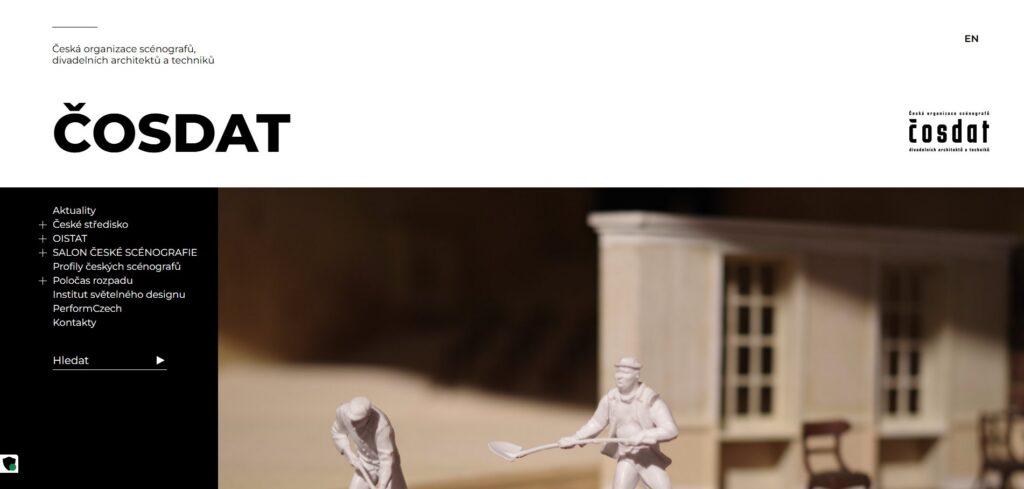
jachymtopol.czA cultural organisation’s website presenting its work, educational projects, specialist resources and archive of activities.
svetelnydesign.czA website dedicated to an artist and their work.
steklik.czTools & experience
From backend development and linked data to interfaces, maps and document automation. I enjoy learning, discovering new connections and finding methods I can put into practice.
Selected projects
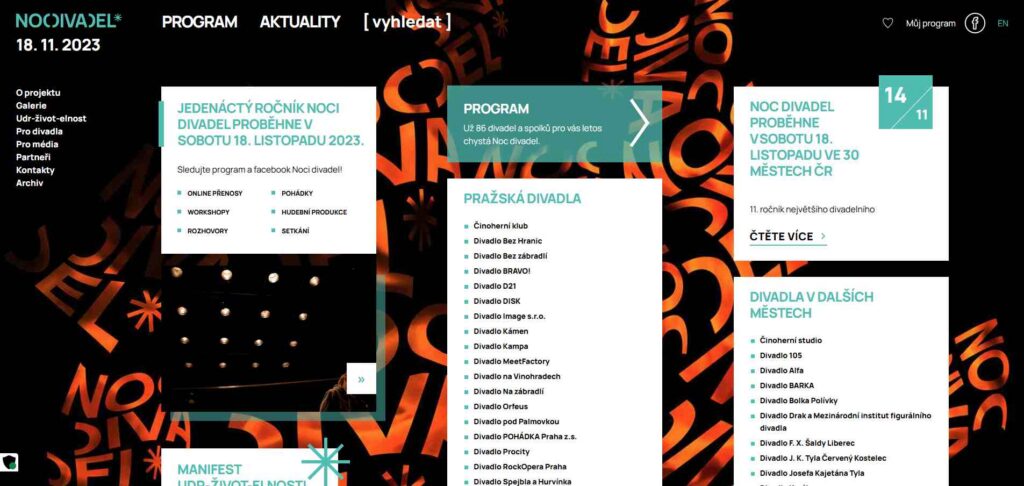
Websites, design and plugins. Examples of my work, from the initial design to a working solution.
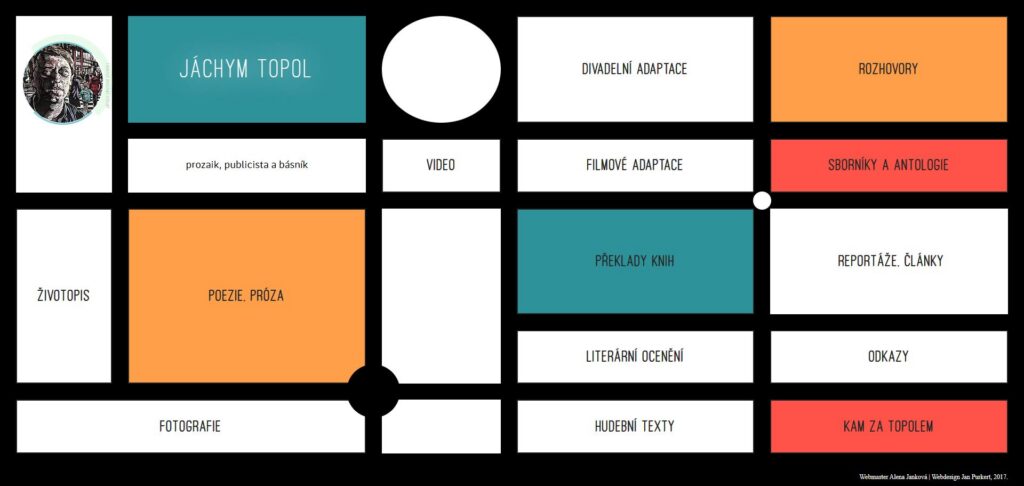
New website for a Czech writer
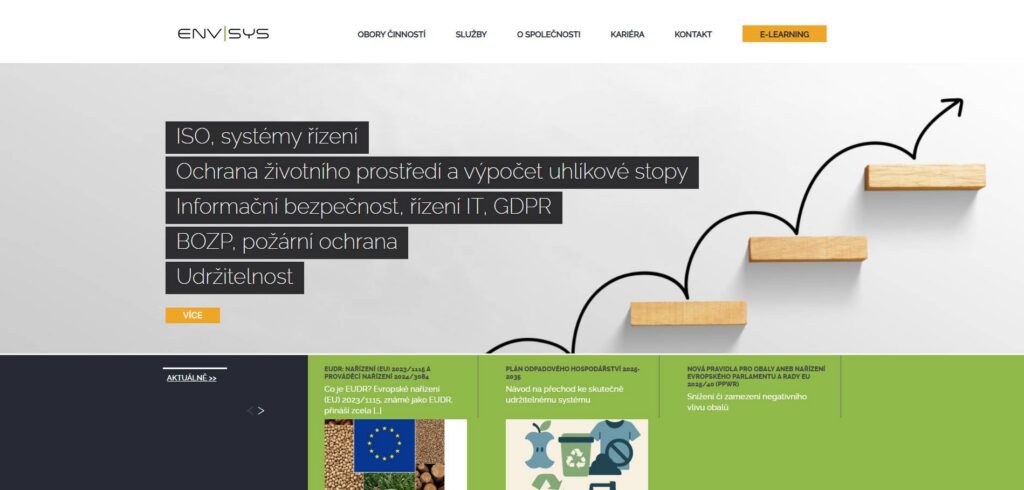
New website for Czech consulting firm
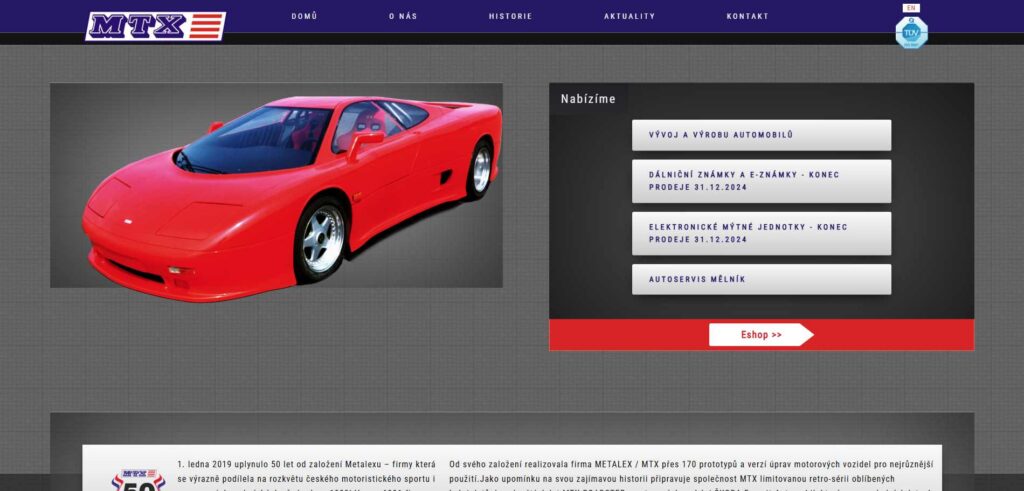
New website for a Czech company
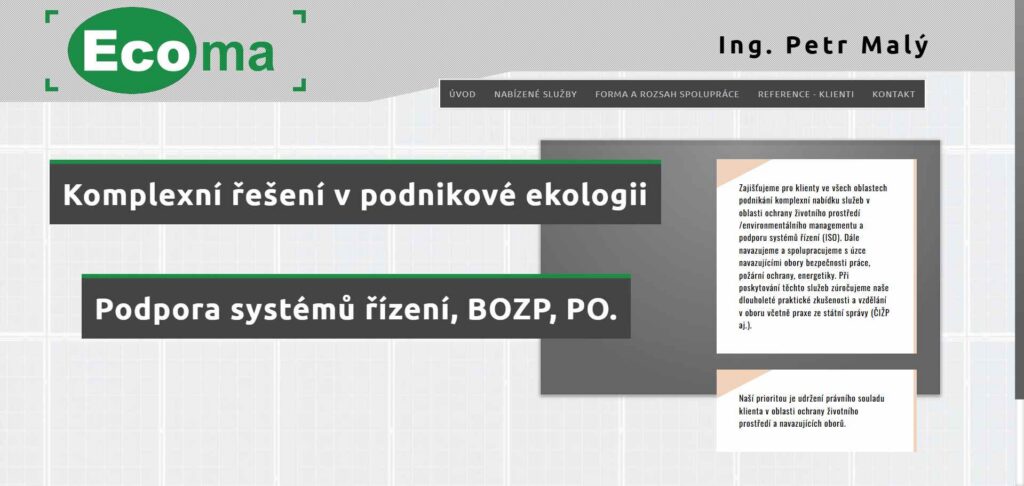
New website for Czech consulting firm
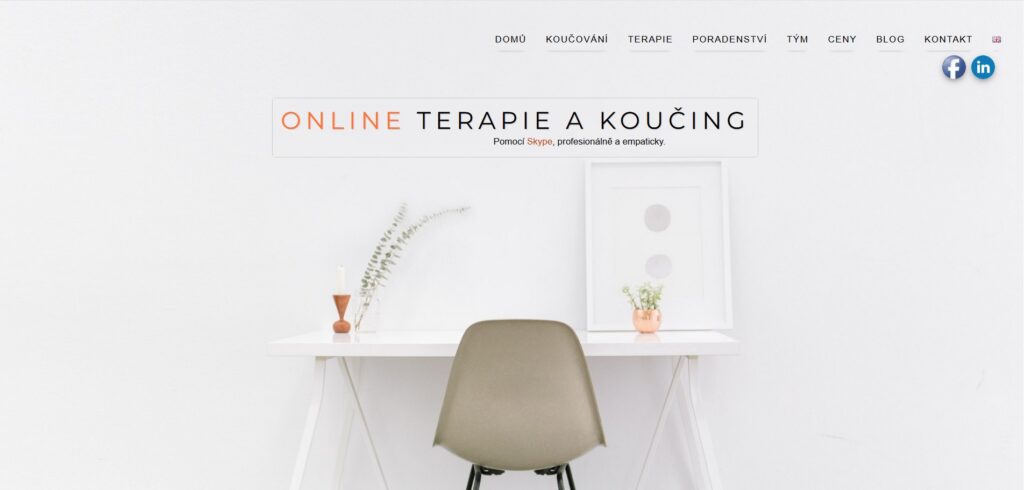
website for a psychologist
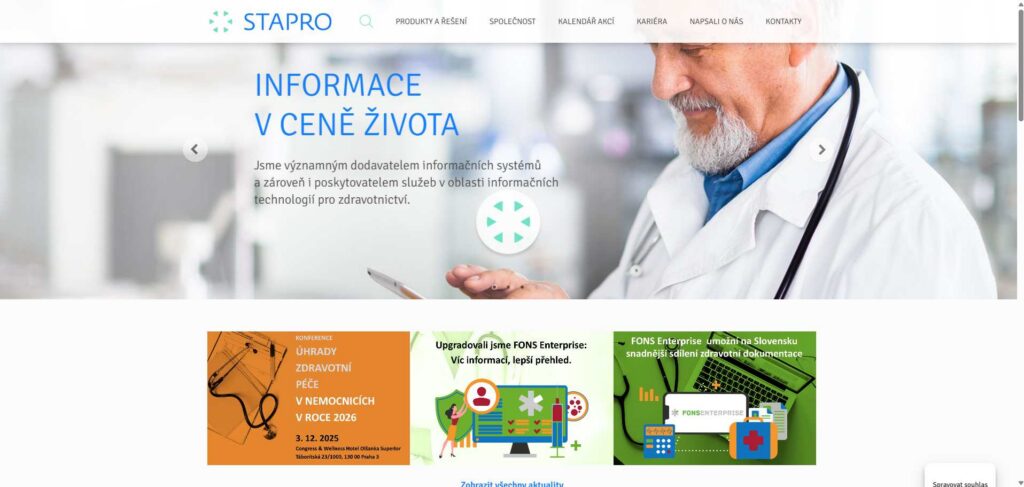

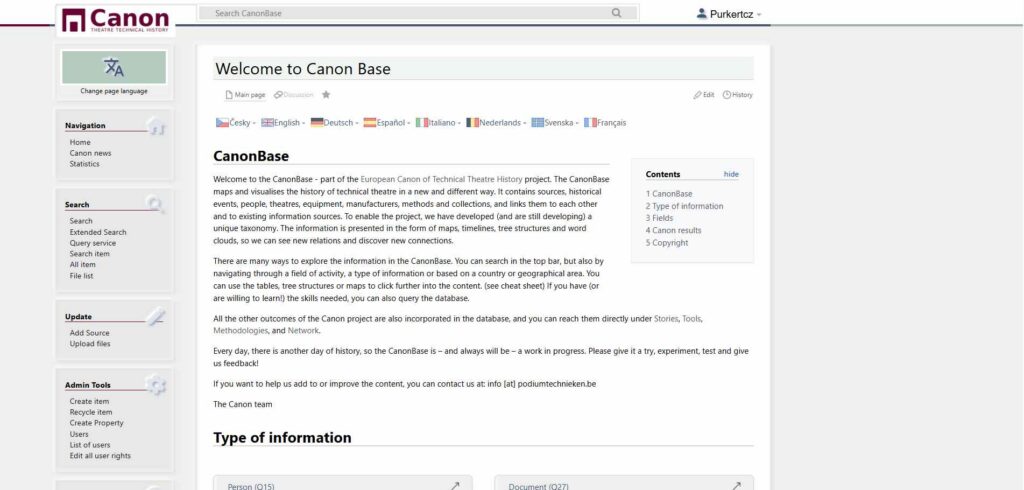
a database based on MediaWiki
The simplest code possible. No builders.
Functional websites and structured data designed
with long-term durability, speed
and easy maintenance in mind.
Custom WordPress websites
I create presentation websites for freelancers, businesses, associations and non-profit organisations, from microsites to extensive websites designed to grow with the project.
I specialise in turning graphic designs into responsive, user-friendly websites that work reliably on computers, tablets and mobile phones.

From design to a working website
Do you already have a design from a graphic designer? I will implement it, including all the necessary templates, components and functionality.
I focus on a clear structure, fast loading and room for further development. Your website will remain maintainable over the long term, without depending on dozens of unnecessary plugins.

Interactive interfaces · REST API · React
I focus on connecting React to database systems, building interactive user interfaces and visualising structured data.
For projects that need more than a standard website, I build interactive React applications. WordPress can continue to provide a clear administration interface, while React delivers a fast, user-friendly frontend.
React Applications & CMS Integration

Optimisation, monitoring,
troubleshooting

REST API, Fakturoid,
Google Drive, Pohoda

Google Maps,
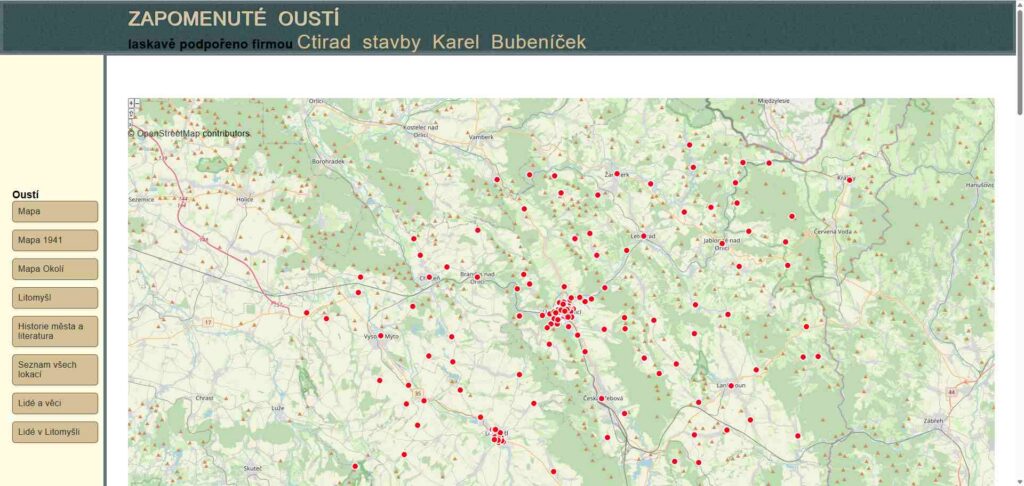
OpenStreetMap

Polylang, translations,
international projects
Web application development and customisation for specific requirements.
When standard themes, plugins or ready-made solutions are not enough, I design and develop custom functionality to meet the specific needs of each project. This may involve a booking system with non-standard rules, process automation, integration with external services or specialised data management tools.
I adapt the technology to the needs of the project, rather than the other way round.
Contact · Jan Purkert
I studied history and, through collaboration with memory institutions and educational projects, found my way into databases and programming.
By combining a humanities background, language skills and technical expertise, I have been building modern, fast and lasting websites since 2017. I specialise in WordPress and MediaWiki.
with WordPress
and applications
(for specialist projects)
Direct collaboration from concept to delivery